

Pourquoi un Smartbook?
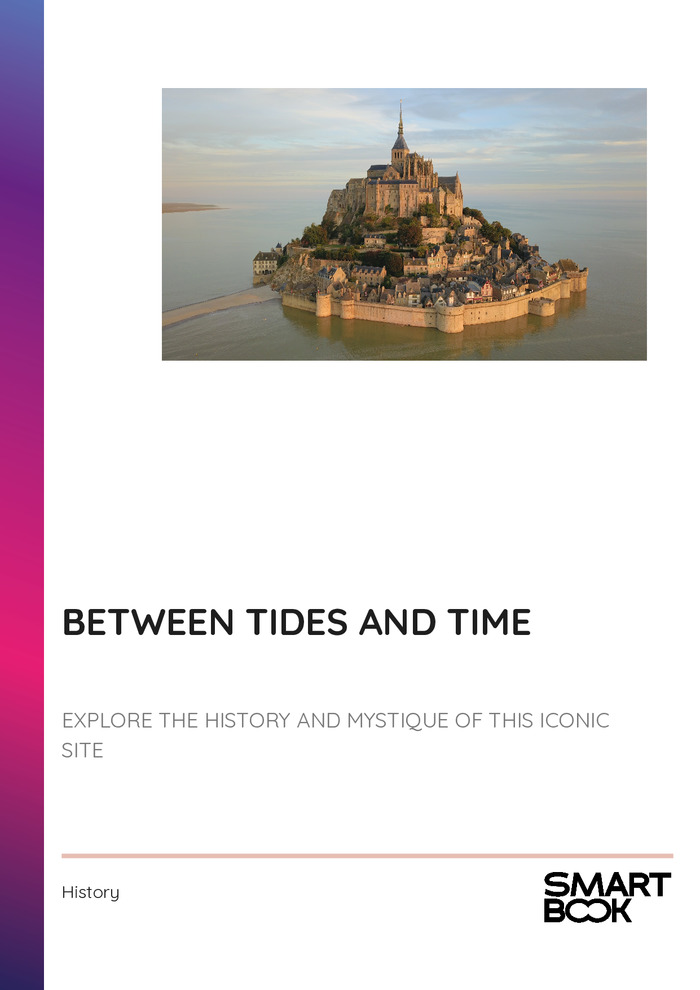
Table des matières
Appendices: Glossary, Quiz, List of useful Wikipedia pages, List of useful websites, Suggestions for further study.
Résumé
Mont Saint-Michel, located in Normandy, France, is a remarkable architectural and historical site. Established in the 8th century as a Christian sanctuary, it has evolved over the centuries into a Benedictine abbey and a major pilgrimage destination. Its unique position on a rocky islet surrounded by powerful tides adds to its mystique and allure. The site is recognized as a UNESCO World Heritage Site, celebrated for its historical significance and its impressive medieval engineering.
The architecture of Mont Saint-Michel is a blend of Romanesque and Gothic styles, showcasing the ingenuity of medieval builders. The abbey's spire rises 170 meters above sea level, a testament to the innovative techniques used to construct it in a challenging coastal environment. The site has also played a significant role in history, serving as a defensive stronghold during the Hundred Years' War, where its fortifications proved formidable against sieges.
One of the most striking features of Mont Saint-Michel is its dramatic tidal changes, which can vary up to 14 meters. These tides create a unique interplay of land and sea, emphasizing the island's isolation at high tide and accessibility at low tide. This natural phenomenon enhances the site's mystical atmosphere, drawing millions of visitors annually who come to experience its beauty and spiritual significance.
Today, Mont Saint-Michel stands as a symbol of French heritage and cultural identity. Efforts to preserve and maintain the site ensure that its historical and cultural legacy endures for future generations. Its architectural brilliance, historical importance, and enduring cultural impact make it a jewel of medieval architecture and a testament to human ingenuity and devotion. Visitors continue to be captivated by its unique charm and the stories it holds.