

Pourquoi un Smartbook?
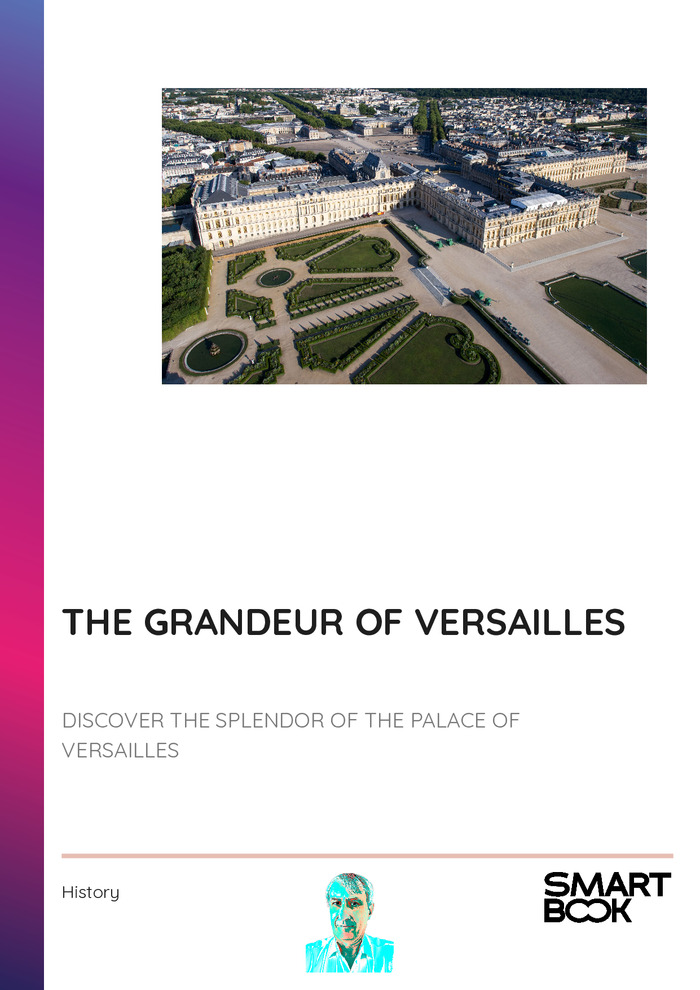
Table des matières
Appendices: Glossary, Quiz, List of useful Wikipedia pages, List of useful websites, Suggestions for further study.
Résumé
The Palace of Versailles is a symbol of the grandeur and power of the French monarchy, standing as one of the most iconic royal residences in the world. Originally built as a modest hunting lodge by King Louis XIII in 1623, it was transformed into a magnificent palace by his successor, Louis XIV, during the 17th century. This transformation marked the beginning of its role as the political and cultural heart of France, serving as the royal court and the center of governance from 1682 until the French Revolution in 1789. The palace's design and construction reflect the ideals of absolute monarchy, showcasing the wealth and influence of the king through its intricate architecture and opulent interiors.
One of the most remarkable features of the Palace of Versailles is the Hall of Mirrors, a grand gallery that stretches over 73 meters and is adorned with 357 mirrors. These mirrors reflect the light from the grand windows overlooking the gardens, creating a dazzling effect that epitomizes the opulence of the palace. The gardens themselves, designed by André Le Nôtre, are masterpieces of French formal garden design. They feature numerous fountains, sculptures, and meticulously arranged flora, embodying the harmony between nature and architecture that was a hallmark of the era's landscape design principles.
Beyond its architectural and artistic splendor, the Palace of Versailles holds significant historical importance. It was the site of many key events, including the signing of the Treaty of Versailles in 1919, which officially ended World War I. This event underscores the palace's enduring role in shaping world history. Today, the Palace of Versailles is recognized as a UNESCO World Heritage Site, a testament to its cultural and historical significance. It continues to attract millions of visitors annually, who come to admire its rich history, artistic legacy, and the grandeur of its design.
This exploration of the Palace of Versailles delves into its rich history, from its construction and role in French history to the daily life of the royal court and its lasting influence on European culture and heritage. The palace remains a symbol of the artistic and cultural achievements of the French monarchy, offering a glimpse into a bygone era of opulence and power. Its enduring legacy as a monument of historical and artistic significance ensures that it will continue to captivate and inspire future generations.