
PRIX : 1,99 EURO ou 1 CREDIT
(Formats pdf, epub et azw3 inclus)
Table des matières
Appendices: Glossary, Quiz, List of useful Wikipedia pages, List of useful websites, Suggestions for further study.
Résumé
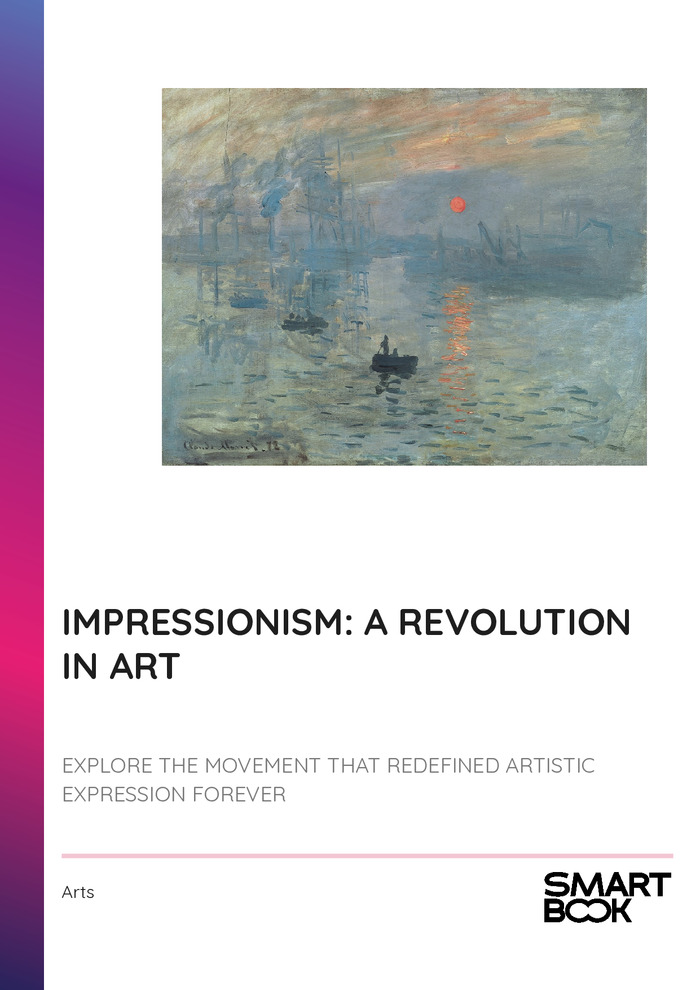
Impressionism emerged in France during the 1870s as a groundbreaking art movement that challenged traditional academic standards. This movement focused on capturing the transient effects of light, movement, and everyday life, offering a fresh perspective on artistic expression. Artists like Claude Monet, Pierre-Auguste Renoir, Edgar Degas, and Camille Pissarro were at the forefront of this revolution, often painting outdoors to authentically depict the fleeting qualities of their subjects. Their innovative approach marked a significant departure from the established norms of the time.
Initially, Impressionism faced rejection and criticism from the art establishment, as its unconventional techniques and subject matter were considered radical. However, the movement gradually gained recognition and appreciation, becoming a pivotal force in the transition towards modern art. The emphasis on spontaneity and the portrayal of ordinary scenes resonated with audiences, challenging preconceived notions of what art should represent. This shift not only redefined artistic standards but also paved the way for future movements to explore new creative possibilities.
The impact of Impressionism extended far beyond its initial period, influencing numerous artistic styles and movements throughout the 20th century. Its emphasis on light, color, and the immediacy of perception inspired artists to experiment with new techniques and perspectives. The movement's legacy is evident in the works of subsequent art forms, which continued to explore the boundaries of visual representation. Impressionism's innovative spirit and dedication to capturing the essence of the moment left an indelible mark on the art world.
In conclusion, Impressionism represents a gentle yet profound revolution in art, reshaping how we perceive and interpret the world around us. By breaking away from traditional conventions and embracing a more spontaneous and personal approach, Impressionist artists redefined the boundaries of artistic expression. Their contributions not only transformed the art world of their time but also laid the foundation for the evolution of modern art. The enduring influence of Impressionism serves as a testament to its significance as a transformative movement in the history of art.