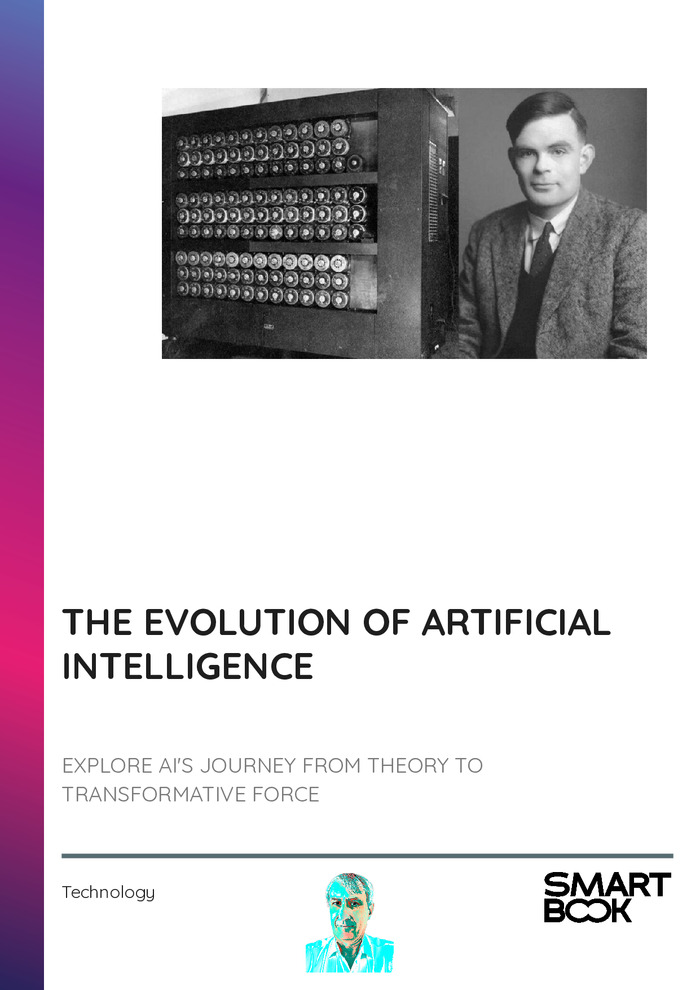
Artificial intelligence (AI) has evolved significantly since its conceptual inception in the mid-20th century. The journey began with Alan Turing, whose pioneering work in the 1950s laid the foundation for the field. His seminal paper, “Computing Machinery and Intelligence,” introduced the Turing Test, a method to evaluate a machine’s ability to exhibit intelligent behavior indistinguishable from that of a human. This period marked the theoretical beginnings of AI, setting the stage for future developments.
The subsequent decades saw the emergence of expert systems in the 1960s and 70s, which utilized rule-based reasoning to replicate human decision-making in specialized domains. These systems, such as MYCIN for medical diagnosis, demonstrated the potential of AI but also revealed its limitations, leading to periods of reduced interest and funding known as ‘AI winters.’ Despite these setbacks, the foundational work during this era was crucial for the field’s progression.
A resurgence in AI occurred in the late 1990s and early 2000s, driven by advancements in machine learning and computational power. The development of neural networks and the advent of deep learning in the 2010s brought significant breakthroughs in areas like image recognition and natural language processing. Landmark achievements, such as DeepMind’s AlphaGo defeating a world champion Go player, showcased the transformative potential of these technologies.
In recent years, the advent of generative AI and large language models, such as OpenAI’s GPT series, has revolutionized the application of AI in both professional and personal contexts. These models leverage vast datasets and computational resources to generate human-like text and understand context with unprecedented accuracy. As AI continues to evolve, it faces multifaceted challenges, including ethical, social, and economic considerations, which will shape its future trajectory and impact on society.