

Why Smartbooks?
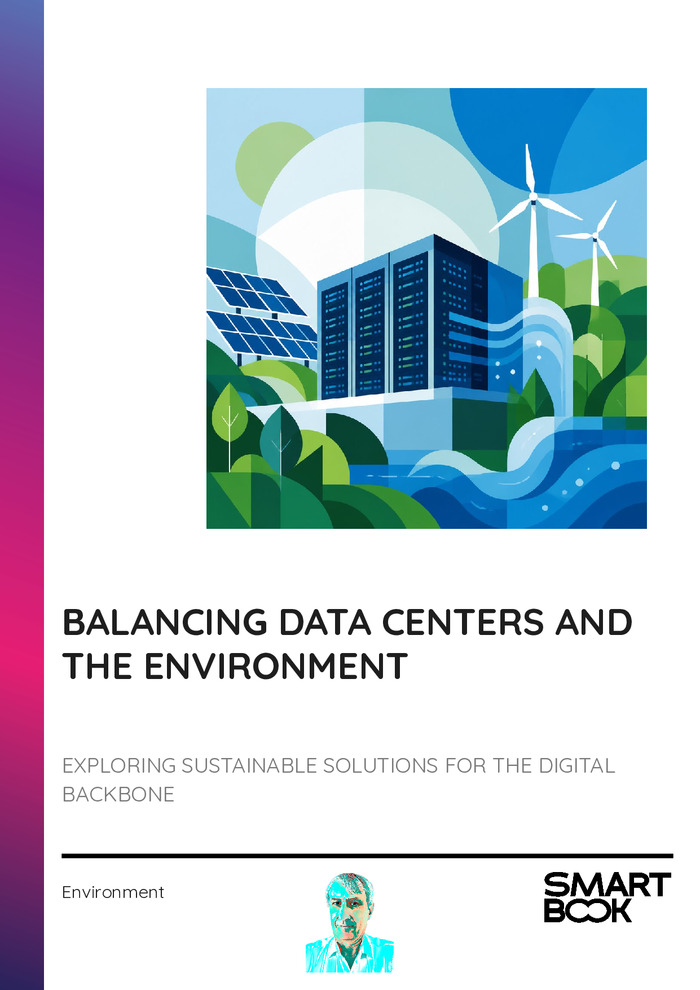
Table des matières
Appendices: Glossary, Quiz, List of useful Wikipedia pages, List of useful websites, Suggestions for further study.
Résumé
Data centers are integral to the digital economy, supporting cloud computing, streaming services, and artificial intelligence. However, their rapid expansion has led to significant environmental challenges. These include high electricity consumption, extensive water usage for cooling, and greenhouse gas emissions. The construction, operation, and decommissioning of data centers contribute to environmental degradation, necessitating the exploration of sustainable solutions to mitigate their impact.
One major concern is the energy consumption of data centers, which accounts for a significant portion of global electricity usage. Transitioning to renewable energy sources, such as solar and wind, can help reduce their carbon footprint. Companies like Google and Microsoft have committed to operating on 100% renewable energy, showcasing the feasibility of such transitions. Additionally, advancements in cooling technologies, such as liquid cooling and free air cooling, can significantly lower energy requirements.
Innovative solutions like heat recovery systems are being implemented in some data centers. These systems capture excess heat generated during operations and repurpose it for nearby buildings or greenhouses, improving energy efficiency and reducing waste. Furthermore, optimized computing infrastructure, including virtualization and cloud computing, allows for better resource utilization, reducing the need for physical servers and lowering energy consumption.
Sustainable practices should encompass the entire lifecycle of data centers, from construction to decommissioning. This includes sustainable sourcing of materials, energy-efficient construction, and responsible recycling of e-waste. Companies like Google, Microsoft, and Facebook are leading the way by integrating sustainability into their data center operations, demonstrating that technological progress can align with environmental stewardship. These efforts highlight the importance of adopting green technologies and sustainable practices to balance the growth of data centers with global climate and resource-management goals.